When someone nearby searches for what you do, the businesses that appear in the map results get the calls, the bookings, and the foot traffic. Everyone else is effectively invisible — not because their service is worse, but because they have not earned a place in local search. Local SEO is the discipline of getting your business into those results: Google Maps, the local pack, and "near me" queries for customers in your area.
This guide breaks down how local ranking actually works and the concrete steps to win more local customers.
The three things local ranking depends on
Google has been consistent about what drives local rankings. Everything you do should ladder up to one of these three factors:
- Relevance — how well your business matches what the searcher is looking for.
- Distance — how close you are to the searcher or the area they specify.
- Prominence — how well-known and trusted your business appears, online and off.
You cannot move your location, but you have enormous influence over relevance and prominence — and that is where local SEO does its work.
Start with your Google Business Profile
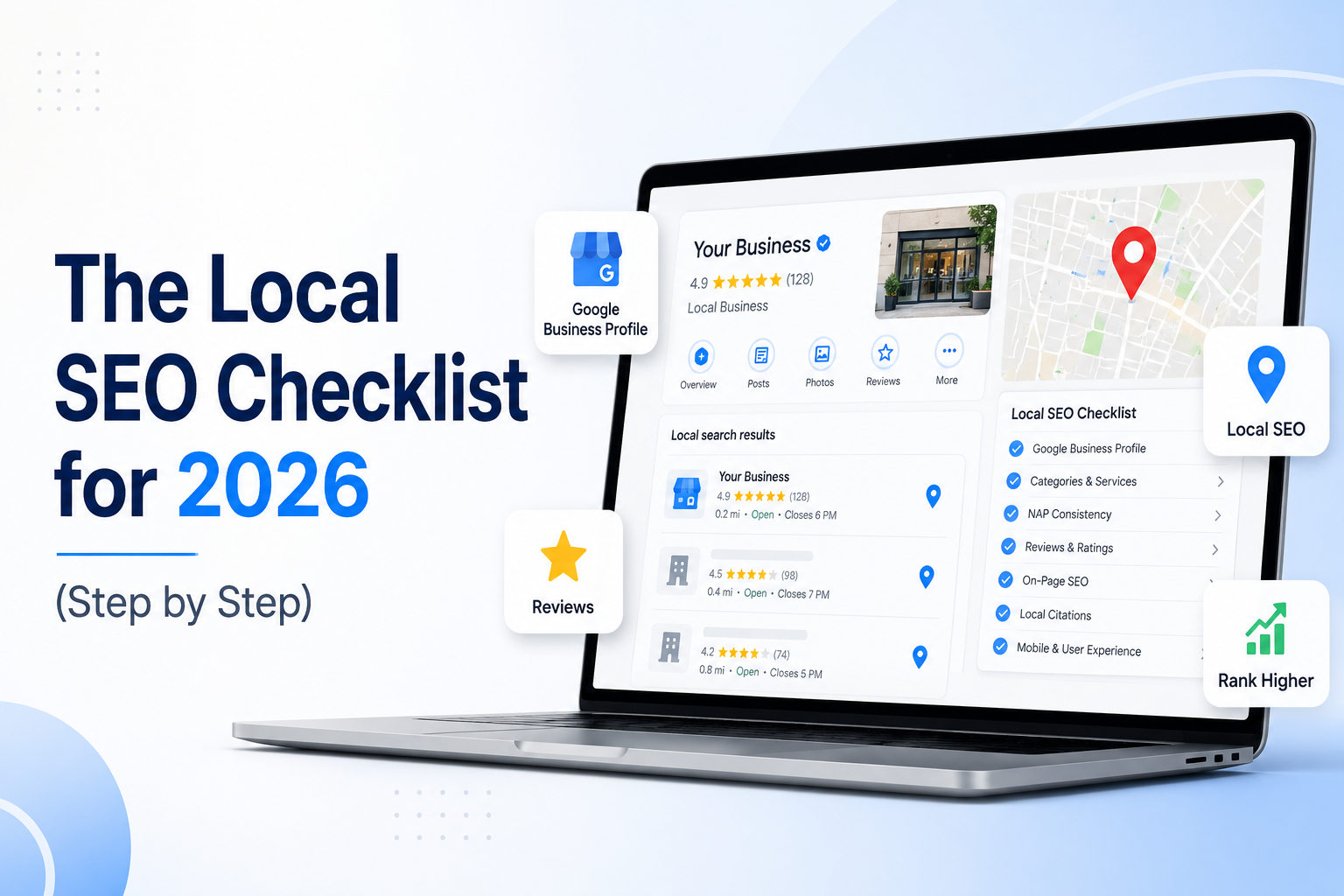
Your Google Business Profile is the single biggest lever in local search. It is what populates the map pack and the knowledge panel, and an incomplete profile is the most common reason good local businesses stay invisible. Claim it, verify it, and complete every field: accurate categories, services, hours, photos, and a keyword-aware description.
Because it matters so much, we wrote a dedicated, step-by-step Google Business Profile optimization guide — work through that alongside this article. It also connects directly to how your Google Business Profile and website reinforce each other.
Build local relevance on your website
Your website tells Google where you operate and what you do. To strengthen local relevance:
- Create clear service pages and, where it makes sense, city or service-area pages that name the places you serve.
- Keep your name, address, and phone number (NAP) identical across your site and every directory.
- Add LocalBusiness schema so engines can read your location, hours, and services without guessing.
- Make sure the site is fast and mobile-first — most local searches happen on a phone.
If your current site is not built to support this, a focused small business website or SEO foundation is usually the fastest fix.
Earn reviews and citations
Reviews and citations are the heart of prominence. A steady flow of genuine, recent reviews signals to Google — and to customers — that you are active and trusted. Make asking for reviews a routine part of finishing a job, and respond to every review you receive.
Citations — consistent listings of your business across reputable directories — reinforce that your business is real and located where you say it is. Inconsistent citations (old addresses, wrong phone numbers) quietly drag your rankings down.
Don't forget "near me" and AI answers
Local search is increasingly answered without a map at all — through "near me" phrasing and AI assistants. The same signals that win the map pack also help you appear in those answers. Our guide on how to show up in "near me" searches covers this, and it ties into broader AI visibility (GEO) work as more buyers ask assistants for local recommendations.
Track what actually matters
For local SEO, vanity traffic is the wrong metric. Watch the actions that mean revenue:
- Calls from your Google Business Profile
- Direction requests and profile visits
- Map-pack rankings for your core terms
- Form submissions and bookings from local pages
Bringing it together
Local SEO is not one task — it is a system: an optimized profile, a locally relevant website, consistent citations, genuine reviews, and clean structured data, all reinforcing each other. Done well, it puts you in front of customers at the exact moment they are ready to call or visit.
If you would rather have the whole system built and managed for you, our local SEO services cover profile optimization, local content, citations, reviews, and reporting month to month.